





US economic growth slows unexpectedly in second quarter
Commerce Department releases advance GDP estimate for second quarter of 2026
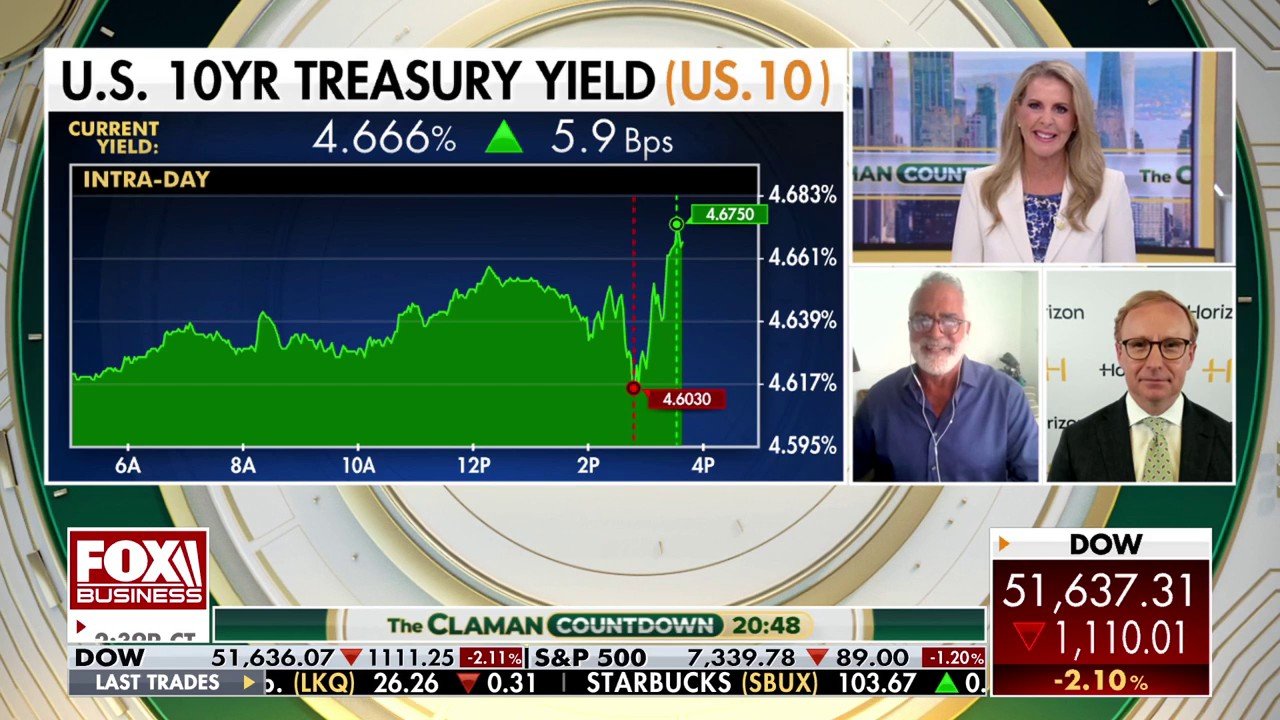
Uncertainty follow Feds latest decision on interest rates, some critics say
Horizon Portfolio Management head Zachary Hill and SlateStone Wealth chief market strategist Kenny Polcari discuss how the market will be impacted by the Federal Reserves decision to leave interest rates unchanged on The Claman Countdown.
U.S. economic growth slowed unexpectedly in the second quarter of the year, according to the Commerce Department's advance estimate.
The Bureau of Economic Analysis (BEA) on Thursday released its advance estimate of second-quarter GDP, which showed the economy grew at an annualized rate of 1.5% in the three-month period including April, May and June.
That figure was below the 2.1% growth estimate of economists polled by LSEG.
It comes after the U.S. economy grew at a rate of roughly 2.1% in the first-quarter of 2026. Taken together with the advance second-quarter estimate, that suggests the U.S. economy grew about 1.8% in the first half of this year.
Last year, the U.S. economy grew at an annualized rate of 4.4% in the third quarter and 0.5% in the fourth quarter, which contributed to a growth rate of about 2.1% for 2025 as a whole.
FED POLICYMAKERS LEAVE RATES UNCHANGED AMID ELEVATED UNCERTAINTY
The BEA reported that the main categories that contributed to the rise in real GDP in the second quarter were increases in consumer spending, investment and exports – which were partly offset by a decrease in government spending. Imports increased in the second quarter.
The increase in investment was primarily due to increases in equipment and intellectual property products. Equipment increases were widespread and led by industrial, transportation and information processing equipment, while the rise in intellectual property products was mainly related to software and research and development amid the AI buildout.
Those gains were partly offset by decreases in private inventory investment, particularly wholesale trade, and nonresidential manufacturing structures.
FED'S FAVORED INFLATION GAUGE SHOWED PRICES PULLED BACK IN JUNE

The U.S. economy grew at a slower pace than expected in Q2, according to BEA's initial estimate. (David McNew/Getty Images)
Real final sales to private domestic purchasers, which is the sum of consumer spending and gross private fixed investment, rose 3.9% in the second quarter – an acceleration from the 1.7% reading in the first quarter.
A revised estimate of second quarter GDP is scheduled to be released in late August, while the final revision will be published at the end of September.
AAA NATIONAL GAS PRICE TOPS $4 AMID RENEWED US STRIKES ON IRAN
Higher gas prices have weighed on the economy amid the conflict in the Middle East. (Allison Joyce/Bloomberg via Getty Images)
What experts are saying
EY-Parthenon chief economist Gregory Daco noted that the "main engines of activity were resilient and broadening consumer spending and surging business information processing equipment and intellectual property products investment linked to AI."
"Looking ahead, we continue to expect moderate consumer spending growth and AI-led business investment to support real GDP growth into 2027. The most immediate downside risk remains a prolonged escalation of the Middle East conflict that lifts inflation and long-term interest rates and pushes the Federal Reserve toward renewed policy tightening," Daco said, adding that would weigh on consumer demand and private sector investment.
GET FOX BUSINESS ON THE GO BY CLICKING HERE
Michael Pearce, chief U.S. economist at Oxford Economics, said that the "subdued 1.5% annualized rise in GDP in Q2 underplays the economy's strength as it reflects a drag from rising imports and falling inventories that won't be sustained for long. We expect an inventory rebuilding cycle to help drive economic growth back above 2% in the second half of the year."
"There's little to change the Federal Reserve's judgment that the economy and labor market remain resilient, meaning the near-term focus will remain on inflation, which came in a touch weaker than expected in June, supporting the decision to leave interest rates on hold," Pearce added.